01
Low protein + peptide binding
Helps minimize nonspecific adsorption to preserve valuable proteins and peptides and support stronger product recovery.
Patent-pending, positively charged PES engineered for high throughput, low nonspecific protein and peptide binding, reliable microbial retention, and effective endotoxin reduction.
.png)
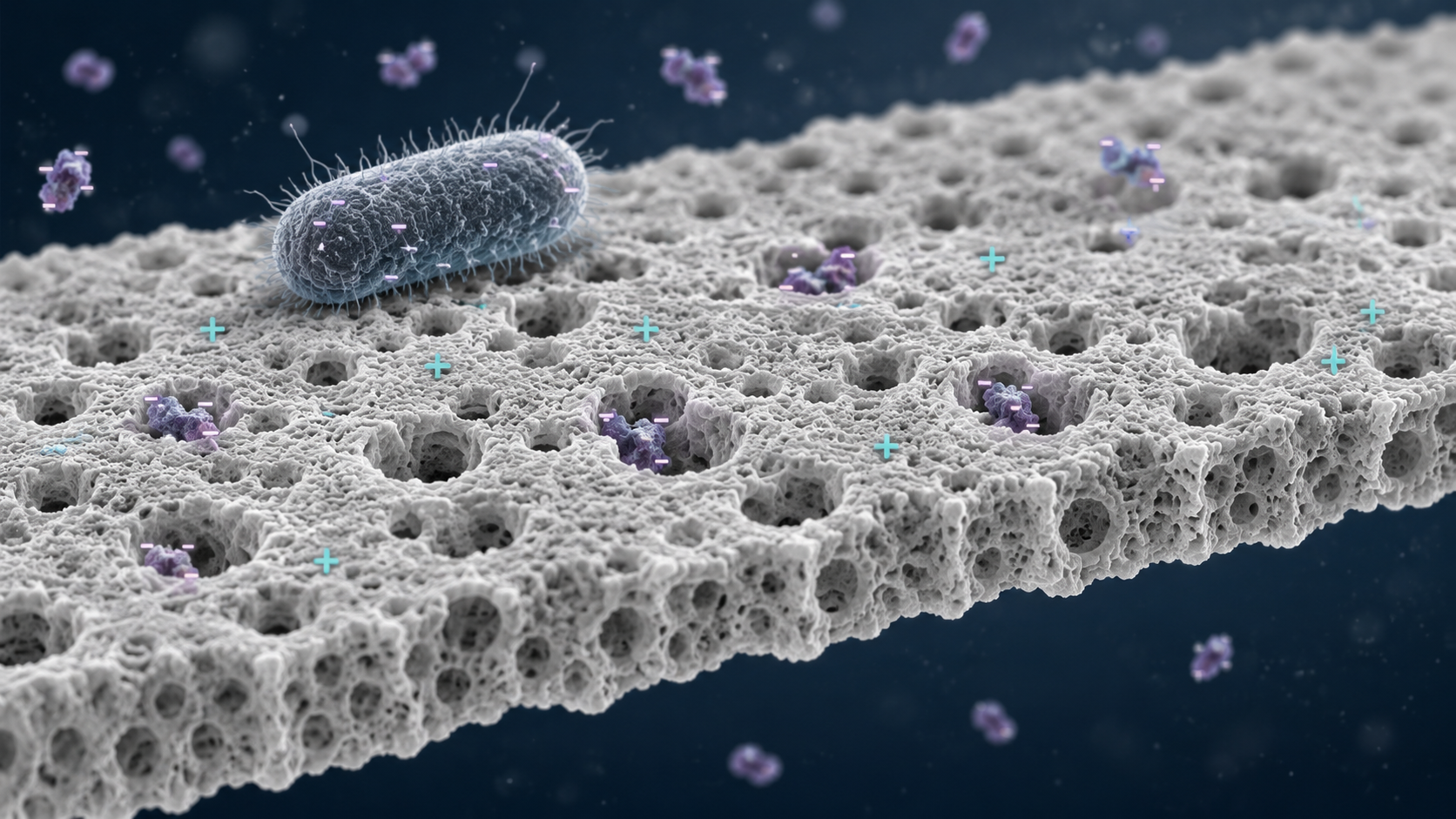
Posipep™ combines a hydrophilic PES membrane with a stable positive charge. Its low-binding construction helps minimize nonspecific adsorption of valuable proteins and peptides, while electrostatic attraction captures negatively charged endotoxin and other biological contaminants.
The result is a high-flow filtration platform designed to support strong product recovery, reliable microbial retention, and endotoxin reduction without a separate downstream adsorptive step.
Helps minimize nonspecific adsorption to preserve valuable proteins and peptides and support stronger product recovery.
Electropositive membrane sites capture negatively charged endotoxin while absolute-rated pore options provide validated bacterial retention.
Single-layer hydrophilic PES construction supports efficient processing, strong throughput, and low extractables.
Available in compact capsules and 5–40 inch cartridge configurations for development through production.
The membrane’s cationic surface attracts negatively charged endotoxin while its low-binding PES construction helps preserve proteins and peptides. Its absolute-rated pore structure provides validated bacterial retention.
| Pore size | Primary use | Diffusion test | Minimum bubble point | Format |
|---|---|---|---|---|
| 0.03 µm | Mycoplasma reduction | 60 psig | Diffusion method | Capsule / cartridge |
| 0.10 µm | Enhanced bioburden control | 48 psig | Diffusion method | Capsule / cartridge |
| 0.22 µm | Sterilizing filtration | 35 psig | 50 psig | Capsule / cartridge |
| 0.45 µm | Clarification / endotoxin reduction | 20 psig | 25 psig | Capsule / cartridge |
Share your protein or peptide, fluid composition, endotoxin challenge, target reduction, batch volume, and throughput requirements.
*Typical endotoxin reduction depends on influent concentration, flow rate, fluid composition, membrane area, and operating conditions. Protein and peptide recovery is molecule- and process-dependent. Final performance should be confirmed in the intended process. Posipep™ is a working product mark pending formal trademark clearance.